
Storage-location inventory: two loading methods
Place movable location bins directly on the cart. Transfer loose goods from fixed locations into storage totes first, retain the location identifiers, and return the goods after counting and review.
05RFID INVENTORY CHAMBER
RFID Inventory Chamber
Designed primarily for storage-location inventory: place movable location bins directly on the cart, or first transfer loose goods from fixed locations into storage totes, then push them into the chamber for checking. Receiving can also be organised one box at a time.
Structure and prototype validation in progressDelivery scope follows actual configuration and validation results
01DESIGNED FOR THE WORK
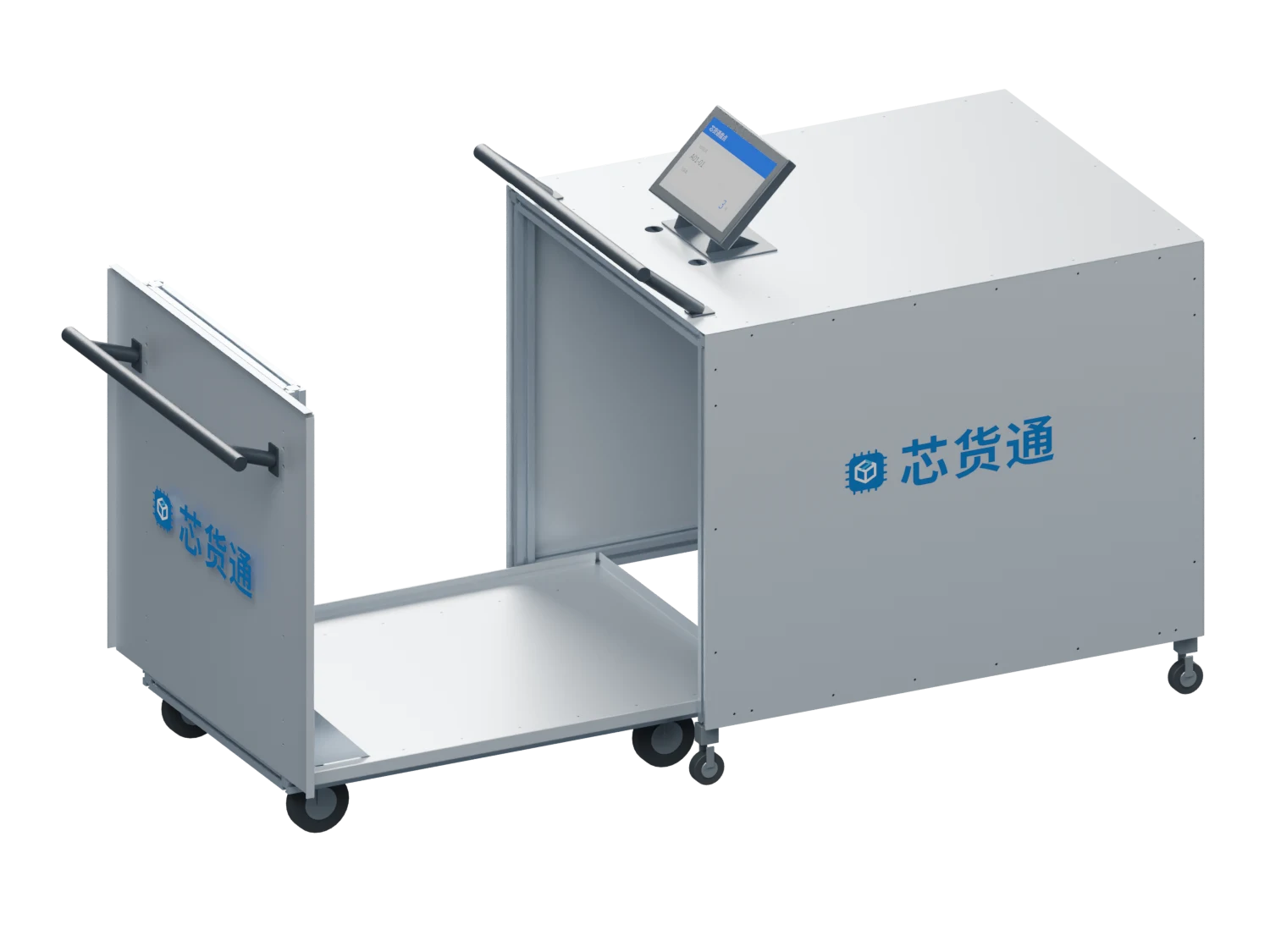
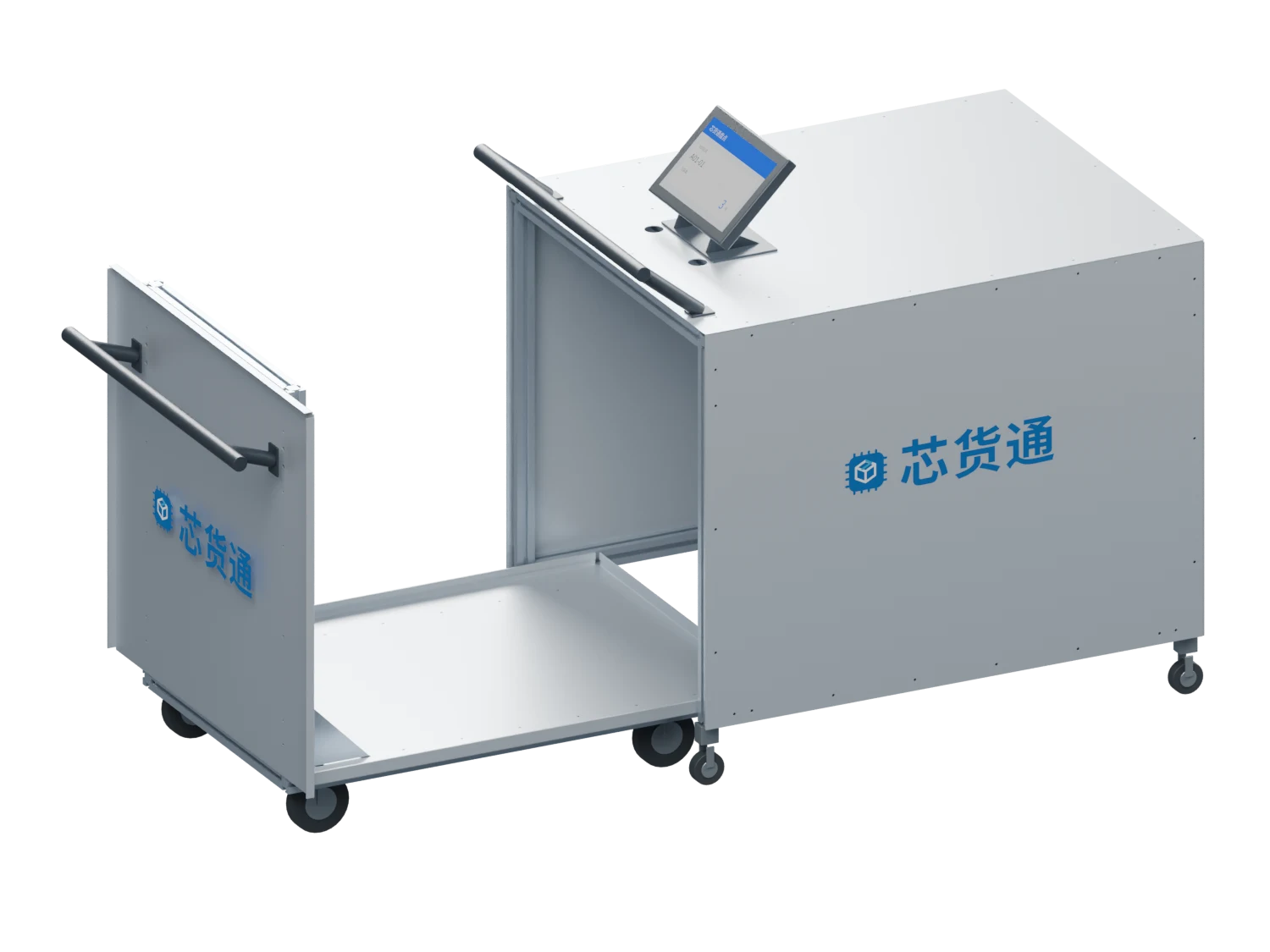
The fixed enclosure comprises a top, two sides and an end panel. The L-shaped cart moves independently with its rear cover and deck. When docked, these two moving panels close the entrance and bottom. Antennas and cables belong to the fixed enclosure; the cart carries the goods.
Suitable applicationsShelf-location inventory / Loose-goods inventory in fixed locations / Box-by-box receiving
Place movable location bins directly on the cart. Transfer loose goods from fixed locations into storage totes first, retain the location identifiers, and return the goods after counting and review.
The vertical rear cover and horizontal deck move with the cart. Cart and enclosure have independent wheel sets.
Retrieve the relevant receiving document or box manifest, read EPCs one box at a time, and check products and quantities. Individual items can be compared when a complete EPC manifest is available. Review discrepancies before confirming receipt through the business workflow; inventory posting remains a separate step, subject to interfaces and permissions.
Shared terminalONE PAD · FOUR STATIONS
10.1-inch Pad with quick-release magnetic mounting
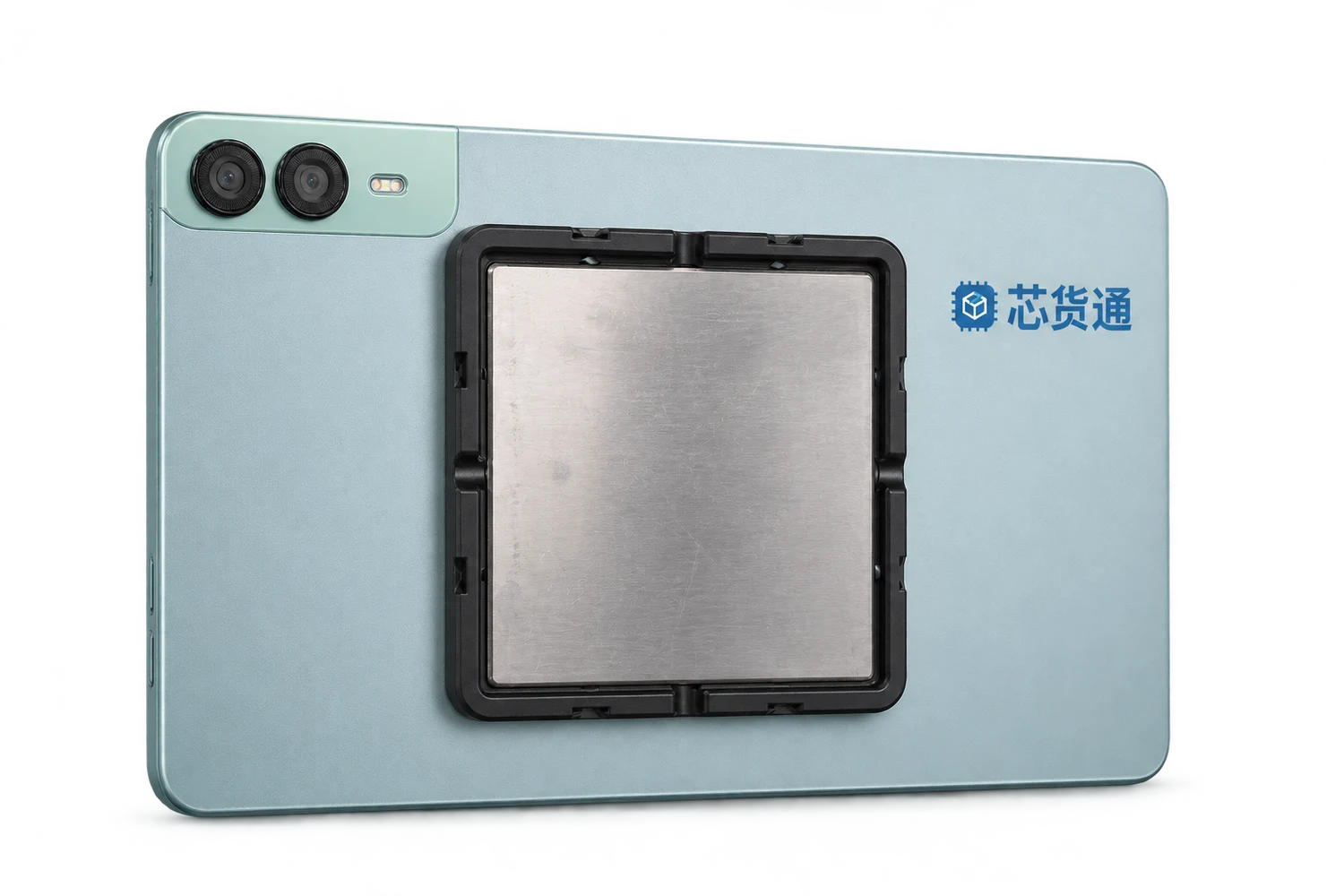
An approximately 110×110mm magnetic mount attaches to the back of the Pad. The Packing Station, Inventory Chamber, Inventory Robot and Returns Inspection Station each have a compatible quick-mount magnetic base. Detach and carry the Pad to the next workstation, then attach it to that device to reduce tablet purchasing and application maintenance costs.
The base rotates and tilts forwards and backwards to suit different operator heights and working positions.
One Pad can be reused at different times. Workstations operating simultaneously each need their own terminal.
Connect the Pad's Type-C port to the equipment-specific interface to control RFID reading/writing, printing and other functions. The magnetic mount provides quick attachment and angle adjustment; the Type-C connection carries control.
How to useFROM STORAGE BIN TO RFID CHAMBER
Keep the storage location linked to the tote's contents before centralised counting.
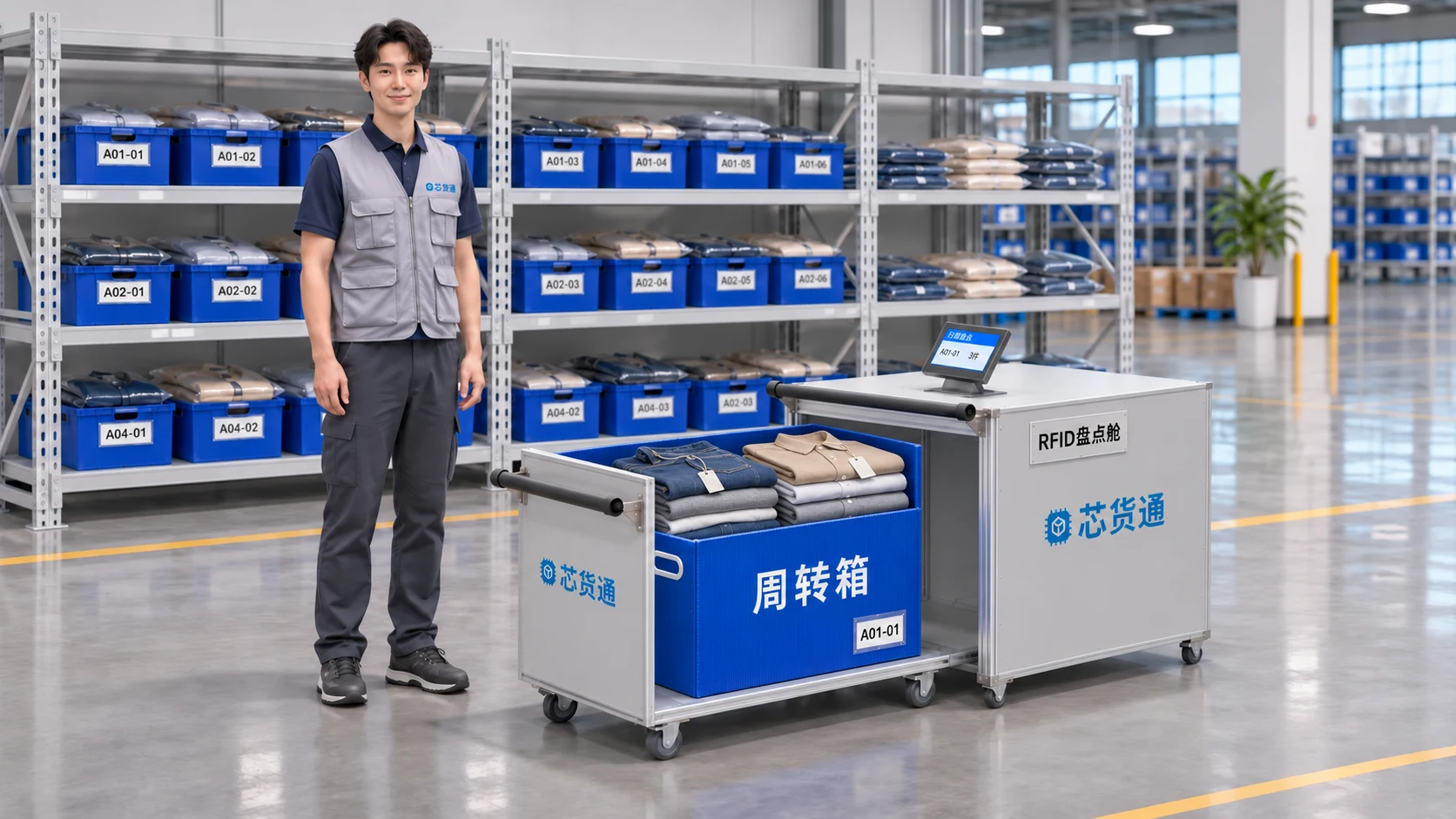
A quick-mount magnetic base on the chamber roof holds a detachable 10.1-inch Pad and supports rotation and forward/backward tilt adjustment. The Pad's approximately 110×110mm rear magnetic mount also fits the Packing Station, Inventory Robot and Returns Inspection Station. Type-C connects to each device's dedicated interface to control RFID reading/writing, printing and other functions, reducing purchasing and application maintenance costs.
If a shelf location bin is made from a storage tote and can be moved whole, there is no need to empty its goods first. Take it down with its location identifier, place it on the L-shaped cart and push it into the chamber for verification.
If loose goods are stored in a fixed location that cannot be moved, transfer them into a storage tote and retain their original location identifier. Place the tote on the L-shaped cart and push it into the chamber. After checking, return the goods to their original location.
Keep each storage location linked to the items in its tote throughout the operation. Do not mix locations when transferring goods. Tote dimensions, loaded height and weight, tags and packaging materials require prior validation. Expected tags not read and tags read outside the chamber both require review.
02HOW IT WORKS
Remove a movable location bin directly. Transfer loose goods from a fixed location into a storage tote first, keeping the original location identifier and avoiding mixed contents.
Place the tote on the L-shaped cart's deck and push it into the enclosure, checking load, guidance and clearance.
The rear cover closes the entrance and the deck closes the bottom. Read full EPCs using the validated workflow, linking them to the current storage location and batch.
Withdraw the cart and review item details and discrepancies. Return movable bins whole, and return goods from fixed locations according to their original identifiers to prevent misplacement.
03EXPLORE THE WORKFLOW
This demo shows full-EPC deduplication and quantity totals only. It does not represent measured chamber performance.
Fixed enclosure
Top / Left / Right / EndL-shaped cart
Rear cover / Horizontal deckClosed when docked
Mechanically closed; reading performance requires validationRepeated reads of the same tag must not increase the physical item count.
04CONFIGURATION & DELIVERY
Start with your actual goods, tags and working environment,
and agree the hardware, software and service scope together.
A closed structure does not itself establish RF isolation performance. Missed reads inside, cross-reads outside, seams, wheels and loaded operation require physical testing. Unverified read rates and accuracy figures are not published.
05DOCUMENTATION & CONTACT
PDF · English · V1.0 · 2026.11.13
An independent L-shaped cart works with a four-sided enclosure. When the cart is withdrawn, the enclosure's entrance and bottom remain open.
There is no need to empty the goods just to load the cart. A movable location bin made from a storage tote can be placed directly on the L-shaped cart and pushed into the chamber, then returned whole to its original shelf location after review.
Transfer the goods into a storage tote and identify their original location. Put the tote on the L-shaped cart and push it into the chamber for counting. After withdrawal and review, return the items to the marked original location to prevent mixing or misplacement.
CONTINUE EXPLORINGRELATED PRODUCTS
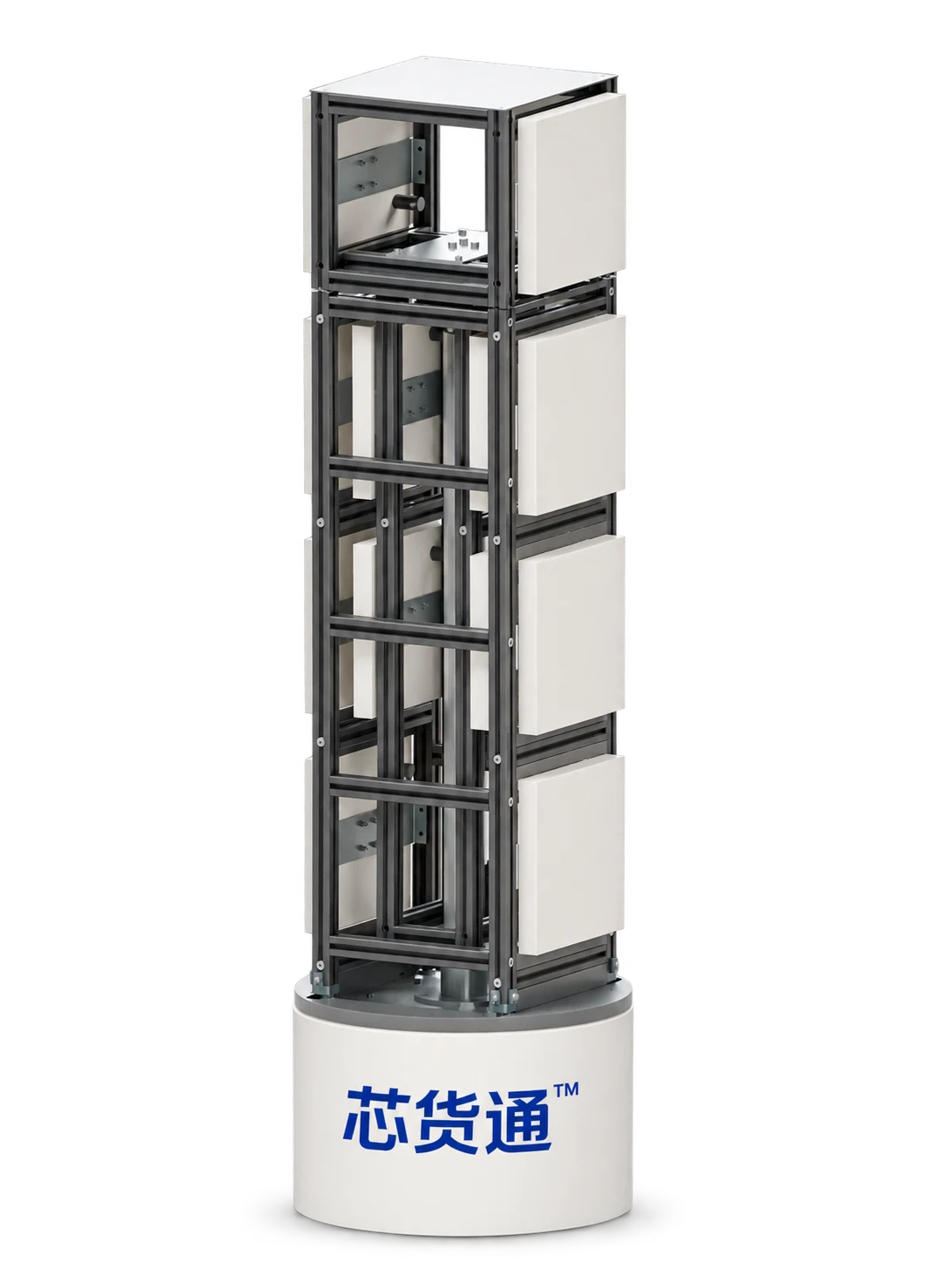
A mobile base, antenna lift and inventory software work together for zoned warehouse capture and discrepancy review.
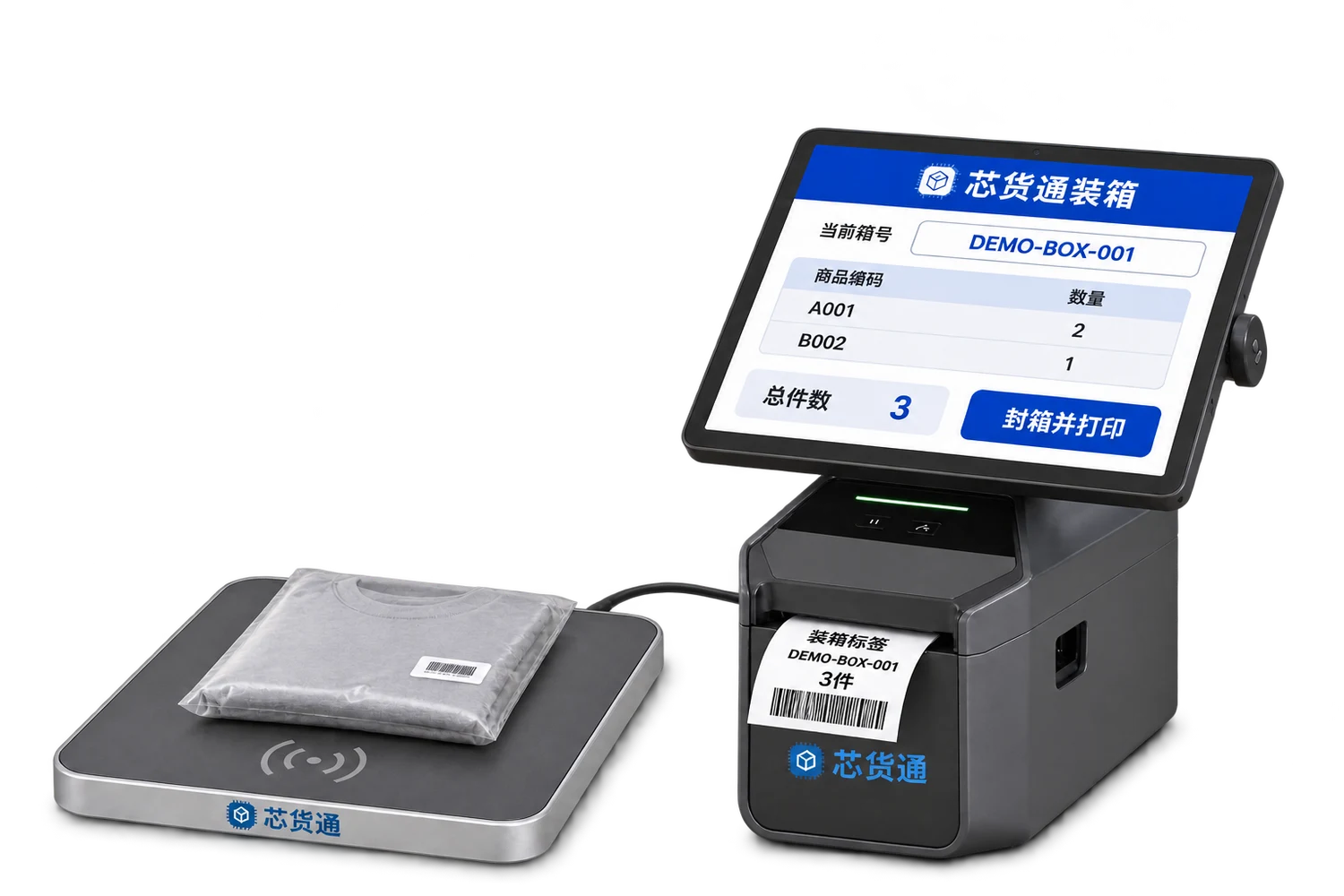
Scan individual item codes or read EPCs, link them to a box code, print the box label and pass the item list to the receiver.
LET’S BUILD YOUR WORKFLOWStart with one workstation or one warehouse